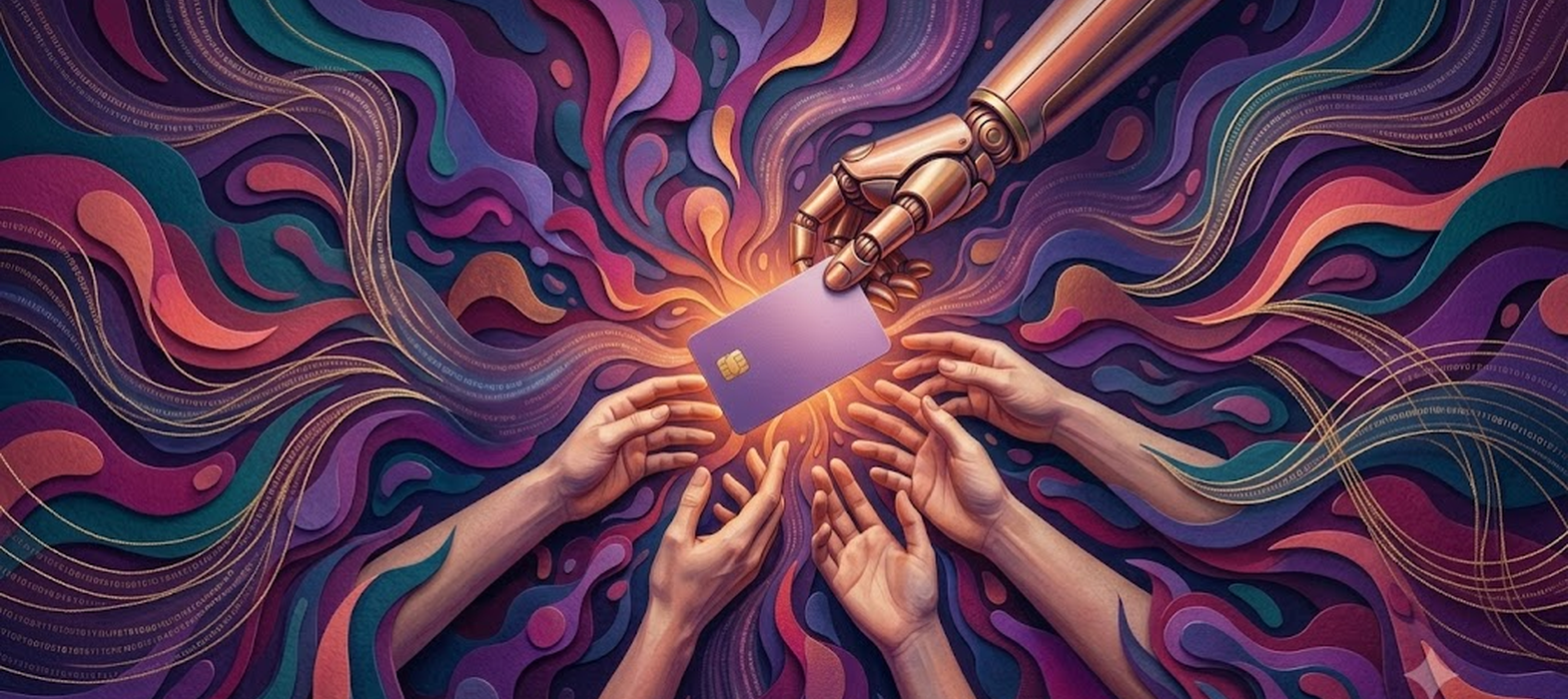

I spent yesterday on a panel at the SubscriptionX Summer Festival discussing a question that sounds like science fiction - what happens to subscriptions when your next customer is a machine.
For the past decade, the subscription industry has optimised a single relationship. Brand to human. We learned that subscriptions are emotional before they're rational, that people stay long after the spreadsheet says they should leave, and that the moment someone cancels is rarely about the thing they tell you it's about.
A decade of getting fluent in human messiness.
So when AI agents started browsing, comparing, and managing subscriptions on people's behalf, the industry reached for the obvious question. What do we do when the customer is a machine? How do you market to something that runs on pure logic? Something that has no sense of self, no habit to lean on, no aspiration to sell to?
I think that question is wrong, and it's wrong in a way that will cost you.
The agent isn't a new customer. It's an intermediary acting for the same human you already had. And it doesn't have preferences, it inherits them. When my agent goes off to evaluate streaming services or news subscriptions, it isn't forming its own opinion from a cold start. It's applying mine. It knows what I've kept, what I've cancelled, what I complained about, and what I renewed for three years without thinking.
The machine is logical, yes - but the inputs to that logic are a decade of human emotion that you, the brand, either earned or didn't.
This changes what you're actually competing on, and it's the opposite of what people fear.
The panic goes like this:
Machines are tireless. They'll compare every price point, evaluate every offer, find the optimal deal in milliseconds. Surely that's a race to the bottom. Surely the only thing left to compete on is cost. But that's only true if your product is interchangeable. An agent optimising on price alone is an agent that has decided your product is a commodity, and if it’s decided that, you lost long before the agent showed up.
The race to the bottom isn't something the machine does to you. Instead it's just a reflection, a verdict on whether you built anything worth being loyal to.
There's a harder version of this that a lot of subscription businesses won't want to hear: some of you aren't being chosen at all. You’re being tolerated. Kept because cancelling means finding the login, clicking through the retention flow, maybe making a phone call, and it's never quite worth the bother this month. That friction has been quietly subsidising a lot of revenue, but an agent doesn't feel friction. It doesn't put off a phone call. The subscriptions that survived on inertia rather than value are the first ones it cancels.
The same logic runs through the GEO conversation, which is where a lot of this discussion is heading. Being the brand an AI recommends is downstream of being the brand a human trusted. The agent recommending you and the human renewing you are responding to the same signal. The work of earning that signal hasn't changed. The only thing that's changed is that there's now a second party reading it.
Which is the uncomfortable part, and the reason I think a lot of businesses will get this wrong.
The temptation is to treat the machine as a new frontier, build a separate strategy for it, stand up a parallel system to handle the bit that feels novel, and quietly let the human relationship coast because it feels solved. That's backwards. The human relationship is the asset the agent is reading. Let it decay and you've degraded the only thing the machine has to go on.
So no, I don't think the work is figuring out how to sell to robots. And our job is refusing to let a decade of hard-won understanding of human beings rot just because something new is now standing in front of them.
The brand you've built is the training data for every agent that will ever act on your customer's behalf.
There's also a real infrastructure challenge underneath all this. Can your systems govern a human subscriber and the agent acting for them through the same logic rather than two systems that don't talk to each other? I spend most of my working life on that question. But it's a second-order problem - it only matters once you've accepted the first thing, which is that these aren't two audiences. They're one relationship with a new party standing in the middle of it.
Your next subscriber might not be a person. But it's still buying on behalf of one.
Don't lose sight of who you're really talking to.
---------------
MonetizationOS is edge-native infrastructure that governs and monetizes every access request in real time, from human audiences to AI agents. Get started for free at monetizationos.com