.png)

TL;DR
- WEHCO Media replatformed twenty of their digital markets onto MonetizationOS in seventeen working days.
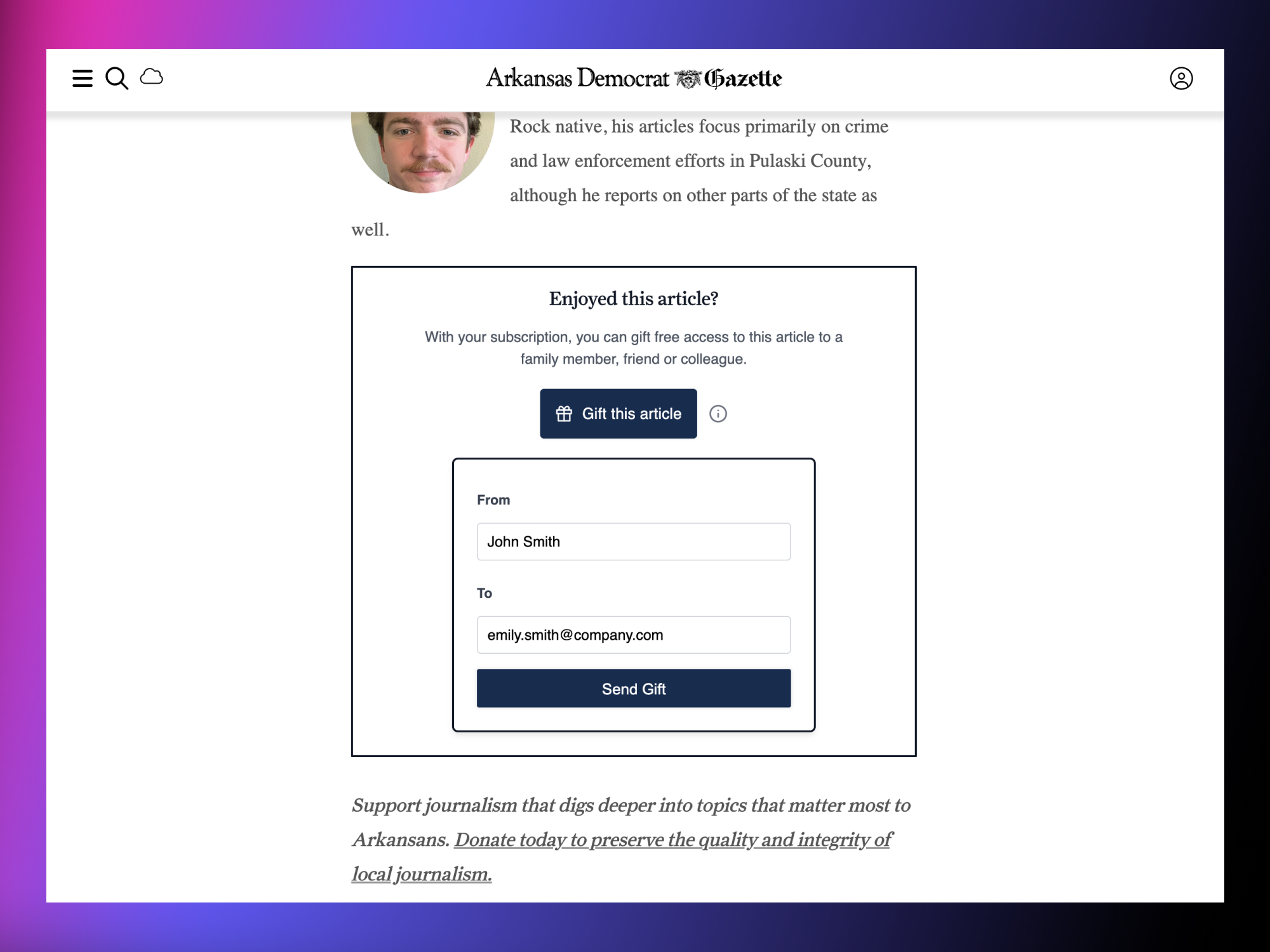
- Gift articles, which took three months to launch on their previous paywall, went live on MOS in three working days. Each additional variant now takes around half an hour.
- Their marketing team now configures monetisation experiences without engineering involvement.
- The wider shift: the engineering queue that shaped two decades of publisher strategy is no longer the binding constraint. The question publisher leadership should be sitting with is which previously impossible strategies are now actually possible.
WEHCO Media has been in the news business since 1909. Family-owned, independent, with daily and weekly papers across six American states. Earlier this year they replatformed twenty of their digital markets onto MonetizationOS. The whole thing took seventeen working days.
How the engineering queue shaped publisher strategy
For most of the last twenty years, publisher monetisation has been bottlenecked by tools and platforms that demand engineering capacity. You want to trial a new subscription offer? Please join the queue. You want to test a new meter behaviour? Six months, probably. You want to launch gift articles? Three months, give or take. The strategic options open to a publisher are defined less by what is theoretically possible and more by what the engineering team can resource to build this quarter.
That bottleneck has shaped the sector. It has produced a generation of monetisation strategies that were structurally static, because the cost of change was so high. Decisions about meter limits, paywall behaviour, registration friction, and gift article rules got made once, deployed slowly, and then mostly left alone. The cost of revisiting them was a planning cycle and three months of someone's quarter, so they were rarely revisited.
The brief from WEHCO
WEHCO Media had been operating inside that constraint for years and decided they wanted something different. The brief they took to platforms was specific: they needed to move faster on paywall and journey management without queueing every change against engineering. They wanted registration, offers, audience targeting, messaging and experimentation in one connected system, rather than stitched across tools that were never designed to talk to each other. Personalisation and testing had to work at scale, not in theory. The registration and subscription experience needed to be cleaner across all twenty of their markets. And the team wanted clearer visibility into what was actually working, so they could optimise rather than guess.
Onboarding with MonetizationOS
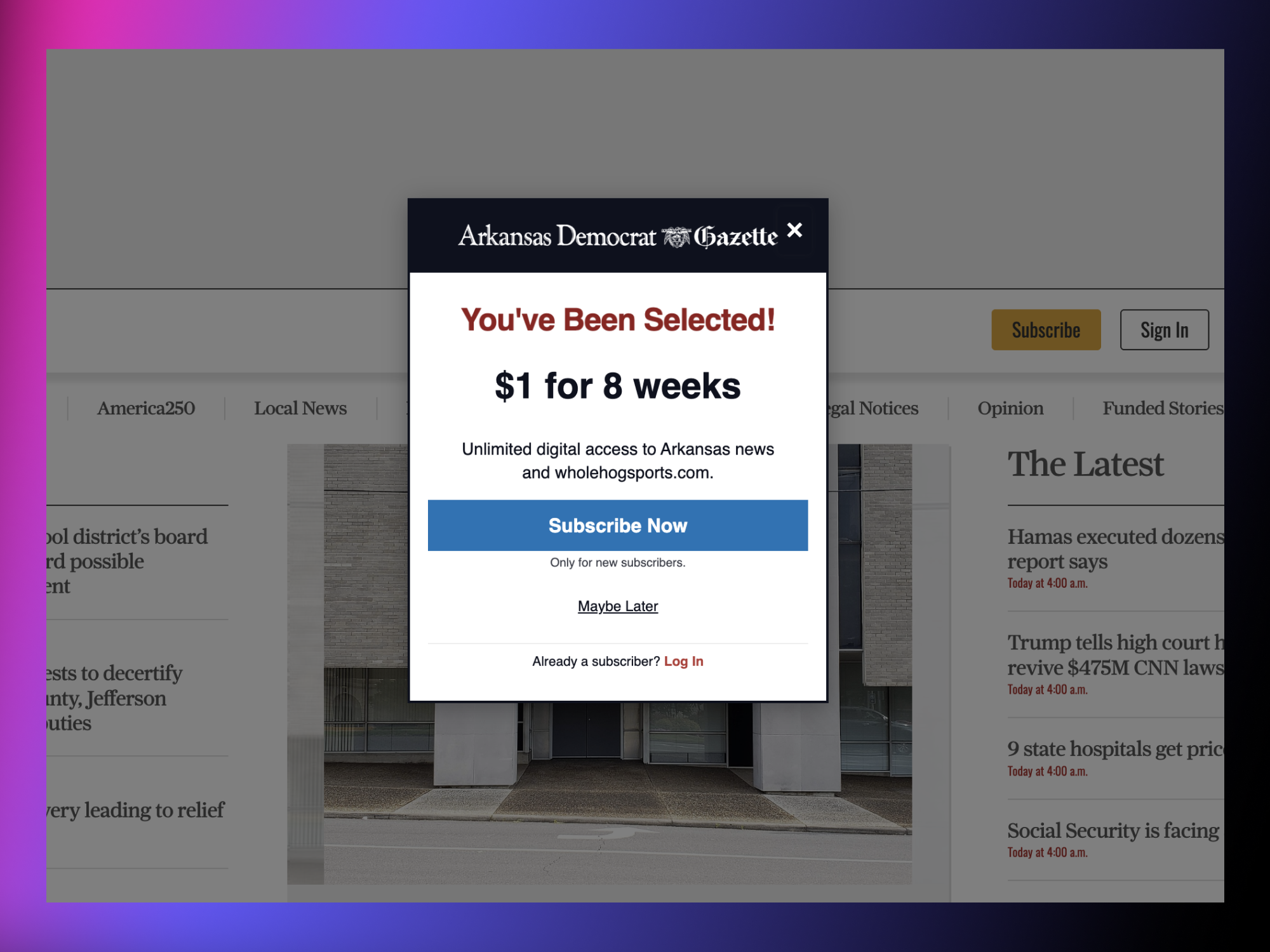
MOS got chosen for a reason that was as much commercial as technical. Most platforms WEHCO evaluated were bundled with subscriber management systems they did not need and could not justify, given the print logistics still running across their business. They wanted a clean access and monetisation layer that would plug into the stack they already operated, not a top-to-bottom replacement of how they ran their commercial setup. The implementation ran in two phases: a short discovery period to map use cases and technical needs, and a configuration phase where the team converted existing logic into MOS and improved it as they went. Contract signature to fully live across twenty markets took seventeen working days, with value showing up before launch. One of WEHCO's developers, logging into MOS for the first time during implementation, said it was already easier than what they had been using.
“The collaboration with the MOS team has felt responsive, strategic and focused on solving real business challenges rather than simply implementing technology.” - Britni Tomcho, VP, Digital Consumer Revenue, WEHCO Media
From three months to three days
At WEHCO, subscriber only article gifting took three months to ship the first time. Using MOS, the first instance went live in three working days. Each additional configuration now takes about half an hour. Registration walls launched across all twenty of their markets in a single afternoon. The whole replatform was complete in seventeen working days.
Take the gift article number alone. Three months to three days is not a 10% improvement. It is not even a 90% improvement. It is the difference between something you do once and revisit cautiously, and something you do continuously because it costs almost nothing. That changes what the whole commercial strategy can look like.
This is not a publishing-specific story. The same shift has happened in adjacent fields over the last decade. Webflow did it to web design. Zapier did it to integrations. Figma did it to UI design. In each case, the locus of capability moved from code to configuration, the cost of trying something dropped by an order of magnitude, and the people closest to the work got to do more of it themselves. The bottleneck stopped being engineering capacity and became strategic clarity.
Where the engineering work actually goes
The honest counterargument is that engineering work does not disappear when configuration replaces code; it moves up the stack. Someone still has to integrate, customise, and extend. But the work that moves up the stack is the differentiated work, the novel integration, the bespoke experience, the things that make this particular publisher uniquely valuable to its particular audience. The undifferentiated work is what should not be eating six weeks of an engineering quarter: configuring meters, A/B testing offers, launching registration walls, deploying gift articles. None of that should be a dev cycle, and at WEHCO, none of it is anymore
There is a deeper implication. Publisher strategy got built around the engineering queue. Plans were shaped by what could realistically be implemented inside a planning horizon. The questions executives asked themselves were filtered through 'is this feasible to ship this year' before they ever got to 'is this the right thing to try.' That filter loosens with MOS. Which means a different set of questions is going to come into view.
Try this as a thought experiment: You can launch a new offer this week rather than queue it for next quarter. Each new article gifting variant costs half an hour rather than three months, and the marketing team rolls out a registration wall across every market by lunchtime. Most publishers have never sat with what those changes and possibilities would imply, because they did not need to.
And then there is machine traffic
There is another question this same shift opens up, and it is the one that matters most for the next few years. What happens to your access strategy when machines start making more requests to your site than people do?
That question would have been theoretical five years ago. It is not theoretical now. The composition of audiences is changing, and the change is structural rather than cyclical. WEHCO can now see machine and human requests in real time, in the same view, governed by the same access layer. That is a precondition for governing them, and governing them is a precondition for monetising them. You cannot price what you cannot see.
What WEHCO's seventeen-day replatform actually shows is not just that infrastructure can be quick. It is that the strategic options publishers have been trained to consider were defined by a previous generation of infrastructure constraints. Some of those constraints are disappearing. Some are gone. Which means the most interesting question for publisher leadership over the next year is not how to make the current strategy work harder. It is which of the things you've been told you couldn't do are now actually possible.
--------------
MonetizationOS is edge-native infrastructure that governs and monetises every access request in real time, from human audiences to AI agents. One million free operations per month, no setup fees, deploys in hours. Get started at monetizationos.com