
TL;DR
- WEHCO Media replatformed twenty digital markets onto MonetizationOS in seventeen working days. The issues the team had braced for either did not materialise or were resolved inside the implementation window.
- The configuration-led design means marketing now ships meter changes, offer variants, gift article setups and registration walls without engineering involvement. Gift articles went from three months to three working days for the first instance, and to roughly thirty minutes for each subsequent variant.
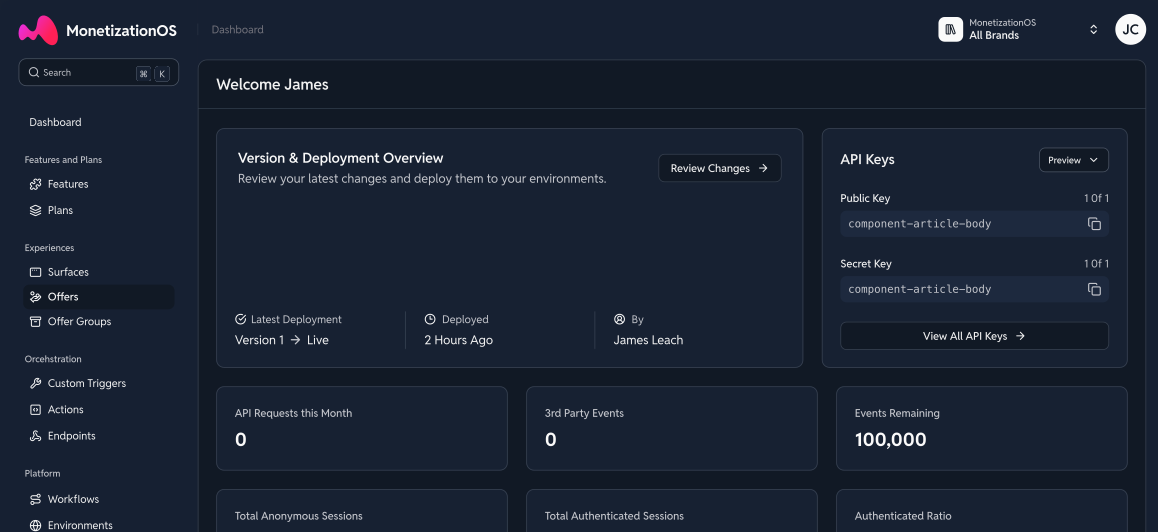
- Real-time observability surfaces every request to the site, human and machine, governed by the same access layer.
- MOS functions as an access layer covering registration, subscription, gifting, machine traffic, experimentation and personalisation in one system. The paywall sits inside that as one feature, rather than as the centre of gravity.
What the launch actually felt like
"We were able to launch before we even finished worrying about everything that could go wrong." — Britni Tomcho, VP, Digital Consumer Revenue, WEHCO Media
Twenty markets is a lot of surface area to migrate at once. The standard expectation in this kind of project is that the launch reveals a list of things nobody anticipated, and the first weeks in production are spent triaging them. WEHCO's launch did not go that way.
The work was split into a short discovery phase that mapped the use cases and technical needs, followed by a configuration phase where the existing logic was rebuilt inside MOS and improved as it went. The existing identity and JWT setup mapped into the platform without needing custom integration work, which removed one of the most common sources of post-launch friction. The replatform was complete in seventeen working days, and the issues the team had braced for either did not happen or were resolved inside that window.
The developer test, on day one
"I just logged in to MOS for the first time and it's already easier." — WEHCO developer during implementation
Developers are usually the harshest first audience for any new piece of publisher infrastructure. They have spent years inside paywall configuration tools and have a sharp eye for which patterns are going to make their lives harder, and they tend to form an opinion within the first hour of using something new.
MOS was designed against that bar. The underlying logic and observability are surfaced transparently in the interface rather than hidden behind abstractions or opaque settings, which means the team can see what the system is doing and why at any moment. That matters because every layer of marketing self-service that sits above it depends on a configuration layer that does not fight the people using it. If the developer experience on day one is heavier than what the team had before, the rest of the platform's promise becomes academic.
Marketing teams as operators, not requesters
"Marketing can build new experiences with little to no dev involvement. We can use the in-workflow AI to change the workflow, creative, or even troubleshoot." — Britni Tomcho
At most publishers, the marketing team operates inside a permission structure that requires engineering to ship anything that touches the page. Even small adjustments like a new meter behaviour, a new offer variant, or a new gift article configuration become tickets that have to fight for sprint capacity, which is why monetisation strategy tends to ossify into whatever was shipped most recently.
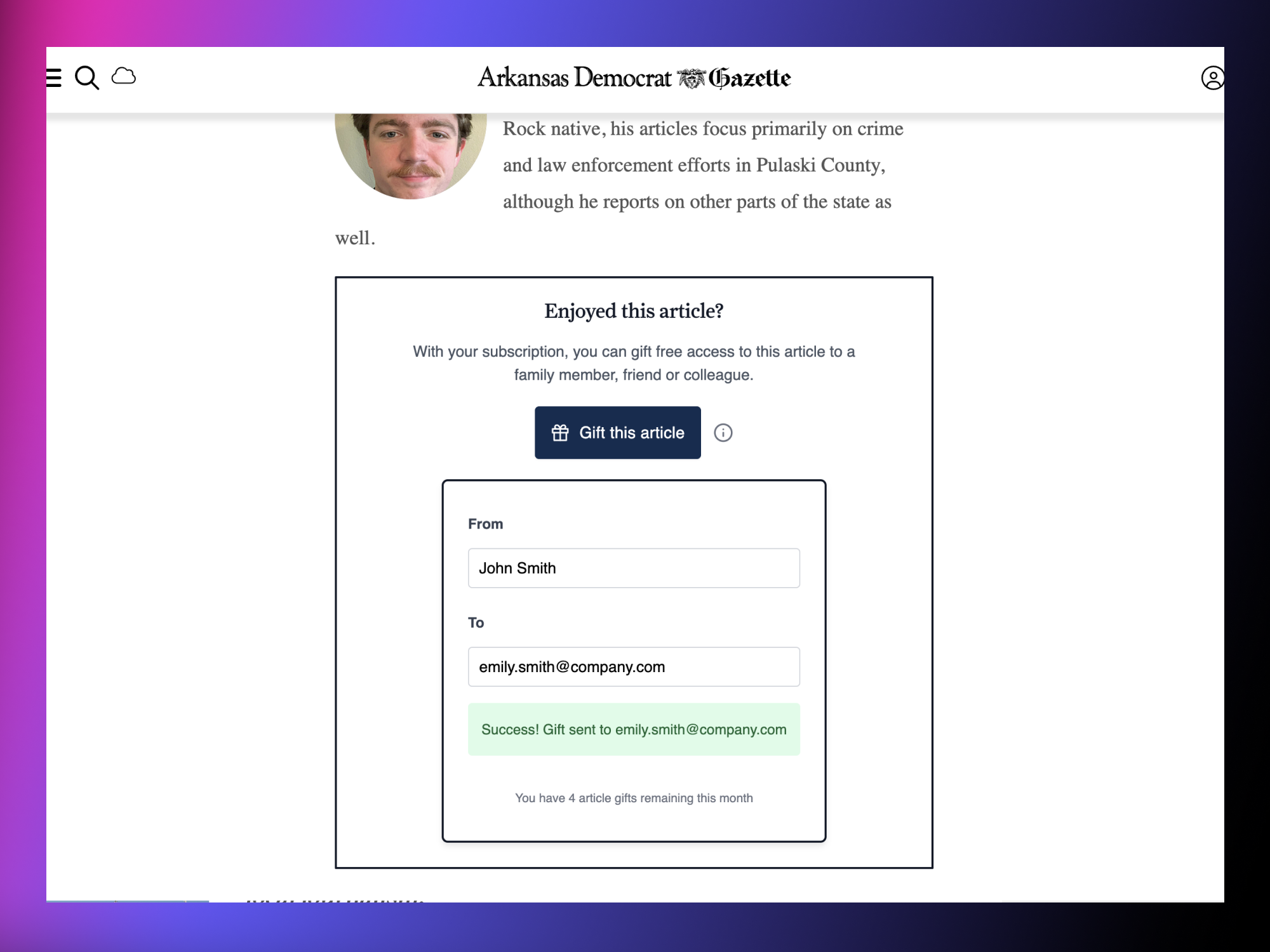
MOS was built on a different assumption, that the people closest to the audience and the offers should be the ones running monetisation directly. The configuration surface is designed to be operable by marketing, and the in-workflow AI handles the parts that previously needed a developer to interpret, such as workflow logic and creative variations, or diagnostics when something does not behave as expected. The outcome at WEHCO has been measurable. Gift articles dropped from three months to three working days for the first instance, and to roughly thirty minutes for each subsequent variant. Registration walls launched across all twenty markets in a single afternoon.

Seeing human and machine traffic in the same view
"In observability, we can see the requests to our site in real time, whether they are human or machine." — Jay Horton, President, Digital
Paywall observability has historically meant after-the-fact analytics. How many subscribers an offer converted, how many sessions hit the meter, how many users churned this month. Useful data, but the time horizon was wrong. By the time the picture was clear, the decisions you would have made differently had already played out.
MOS was designed with observability as a first-class part of the access layer rather than a reporting overlay bolted on afterwards, which means every request to the site can be seen in real time, alongside the rule that resolved it. The composition of publisher audiences is also changing. AI crawlers and other automated systems are now requesting publisher content in volumes that look structural rather than incidental, and seeing those requests as they happen, in the same view as the human ones and governed by the same access layer, is the precondition for governing them. Governing them is the precondition for monetising them. You cannot price what you cannot see.
Beyond the paywall category
"MOS has gone beyond just replacing a paywall tool. It has helped create a more flexible framework for how we think about audience experience and experimentation." — Jay Horton
Paywall as a category was defined by the previous generation of infrastructure, which was built around a single question: should this human see this page? That question is still important, but it is now one of several that publisher infrastructure has to resolve. The same request might also need to be checked against registration status, current entitlements, the user's market and currency, whether they are a corporate IP or a logged-in subscriber, whether the agent making the request is human or machine, and what price applies to whichever combination resolves.
MOS was designed as an access layer that handles all of those resolutions in one system, with registration, subscription, gifting, observability, machine traffic governance, experimentation and personalisation operating against the same underlying entitlements. The paywall sits inside that as one feature among several, rather than as the centre of gravity. WEHCO's team has used that flexibility to build things outside what a traditional paywall product would even consider in scope, including milestone badges that sit above the nav bar based on subscriber behaviour. None of that requires a separate system in their stack, because the access layer is already there.
--------------
MonetizationOS is edge-native infrastructure that governs and monetises every access request in real time, from human audiences to AI agents. One million free operations per month, no setup fees, deploys in hours. Get started at monetizationos.com